
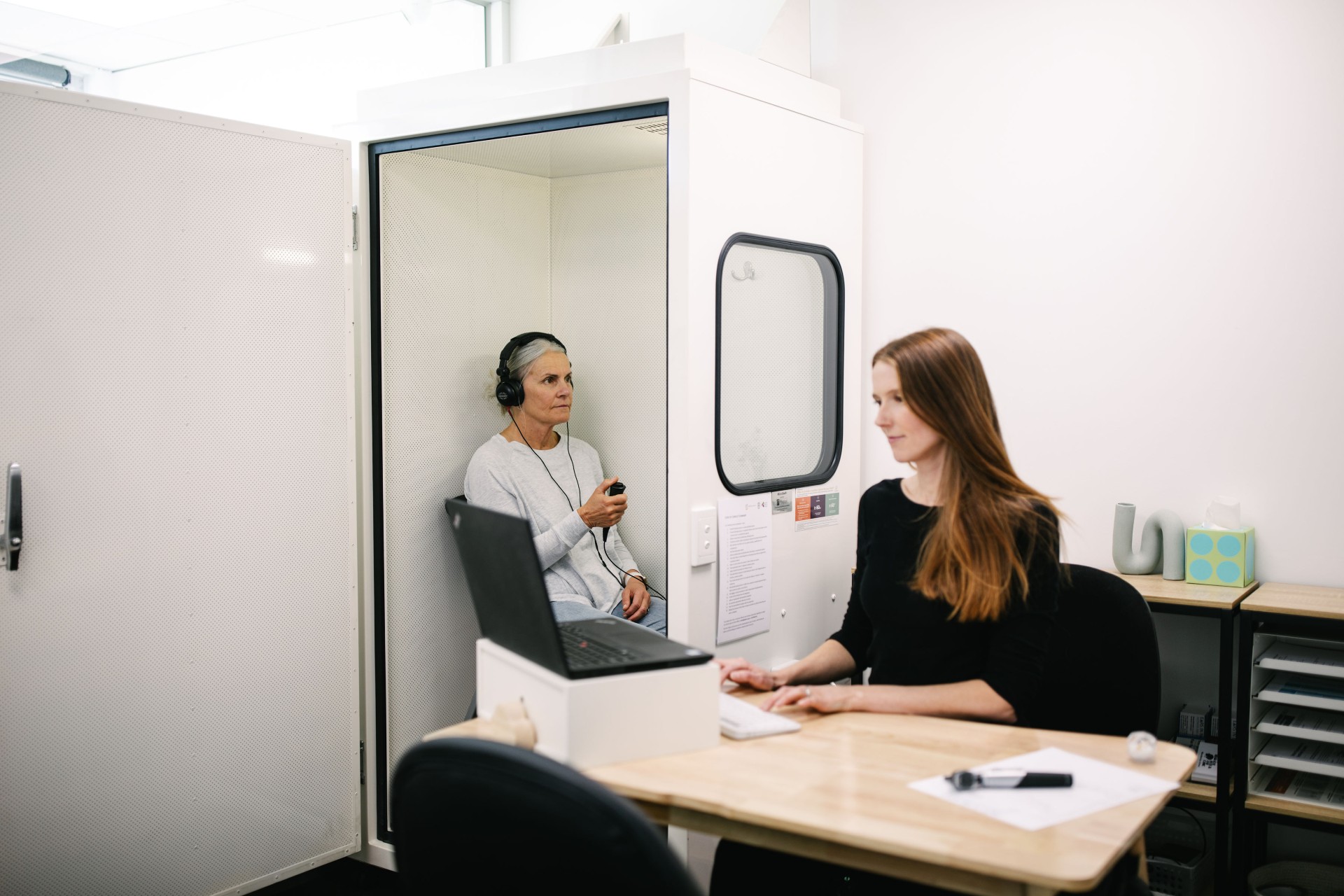
Ears in Balance is a vestibular audiology clinic specialising in Vestibular Function Testing (VFT) for people experiencing dizziness, vertigo, or imbalance. If you’ve never had vestibular testing before, you may be wondering what to expect. At Ears in Balance, we’ll guide you through the process from start to finish and explain what each test is looking at and why it is being performed.
First.
You will need a referral from a GP or medical specialist for your appointment to be bulk billed. You can use your doctor’s referral letter requesting a hearing and balance assessment (audiometry and vestibular assessment), or download our referral form.
Please note: We do not accept care plans.
Please email your referral to [email protected]

Before Your Appointment
How should I prepare?
There are a few simple things you can do to help us get the most accurate results from your testing.
– Please allow up to 2 hours for your appointment.
– Please avoid wearing facial moisturiser, sunscreen or makeup, particularly mascara, as these can interfere with some of our eye movement testing.
– You do not need to stop taking your regular medications unless specifically instructed by your doctor or our team.
– You do not need to be experiencing dizziness on the day of your appointment. Many vestibular conditions are intermittent, so we can still obtain valuable information even when you are feeling well.

Getting here.
Ears in Balance is located directly behind Chelsea Station, next to the Cellarbrations store.
Address: Shop 3, 334–339 Station Street, Chelsea
There is ample 3 hour parking available around the corner from the clinic on Blantyre Avenue and Catherine Avenue.
There are also 90-minute parking spaces directly in front of the clinic.
When you arrive.
Your appointment will begin with a detailed discussion about your symptoms and medical history. We’ll ask about your dizziness or balance problems, when they occur, what brings them on and any other relevant symptoms.
Your Vestibular Assessment
We use a range of specialised tests to assess different parts of your balance system.
These include
- Videonystagmography (Eye movements and visual tracking)
- Video head impulse test to assess the connection between the inner ear and eyes
- Positioning tests to check for the most common cause of vertigo (BPPV)
- VEMP testing, which assesses the gravity sensing organs of the inner ear
Will your tests make me dizzy?
Most vestibular tests do not typically cause significant dizziness. Some tests can briefly reproduce your symptoms, particularly if you have an active vestibular condition such as BPPV. If a test makes you uncomfortable, we can modify or stop the test at any time. We’ll always explain what to expect before we begin.
At the end of your appointment.
We’ll talk you through your results and explain what they mean in straightforward terms.
We’ll discuss any findings that may help explain your symptoms and provide recommendations for what to do next. In some cases, we may need to review your results further before finalising our interpretation to ensure you receive the most accurate assessment.
Your report is overseen by Dr Luke Chen, and once it has been finalised and signed off, it is sent to your referring doctor.